| Milepost 27 National - Hendersonville |
|
|
|
| More pictures
can be found in the
gallery |
|
|
|
|
Gene
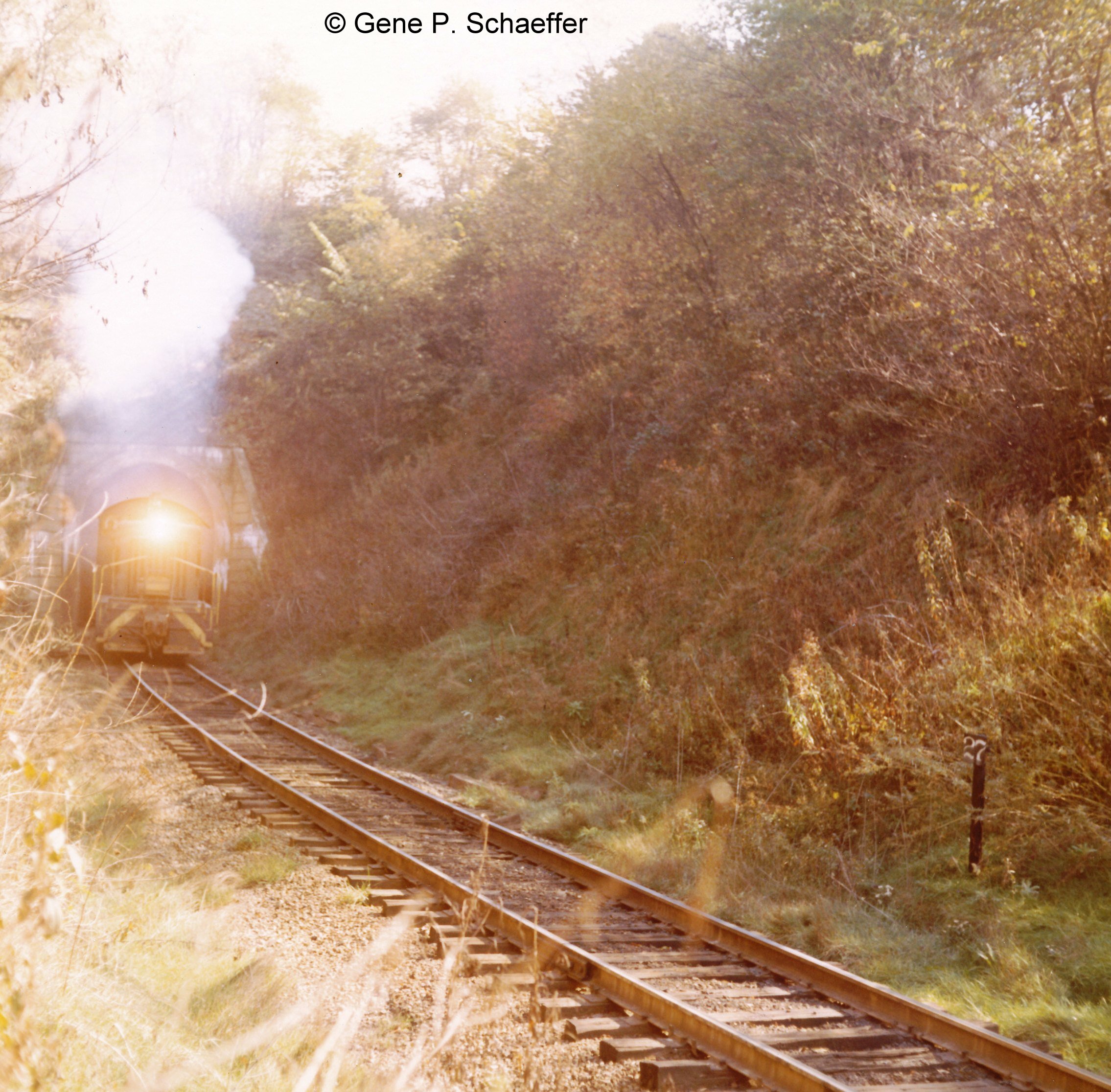
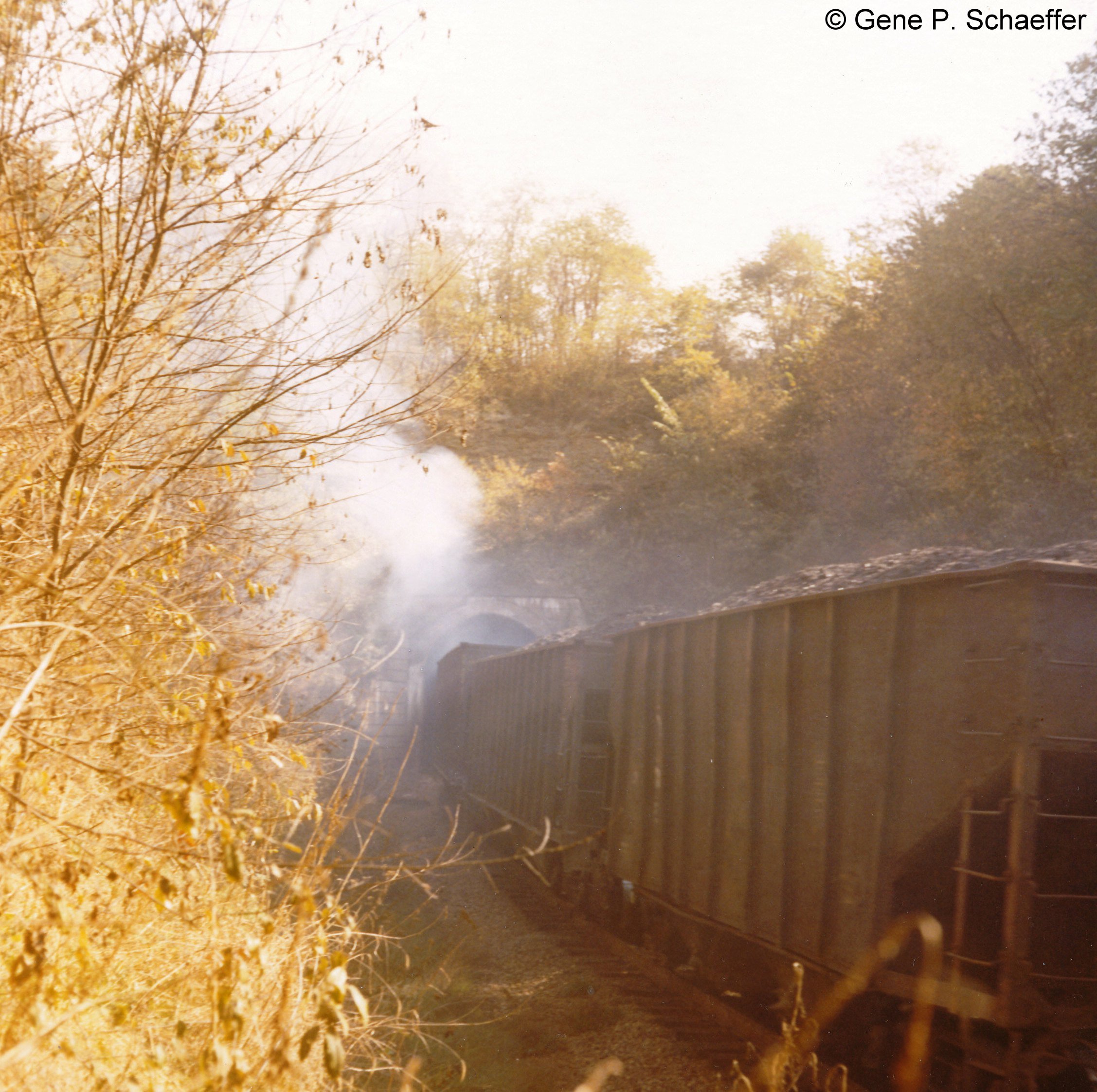
probably remembers when he took these photos and what it sounded
like. We're at the east end of National Tunnel, Milepost 27 as a
westbound coal train pops out of the tunnel. Actually, crawls out
might be more appropriate given the grade and the tonnage.
Folks,
this is what it was all about: Heavy coal trains with 1,200 horsepower
four-axle switchers pulling for all they're worth; drawbars banging
together; wheels clicking over rail joints; a cabin car on the back
with the windows closed to keep out the heat and smoke; and a dedicated
photographer waiting to capture the action.
Thanks for the memories, Gene. The new Westland Branch will never replace them. - Bob Ciminel
|
| | |
|
|
|
 |
 |
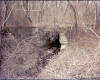 |
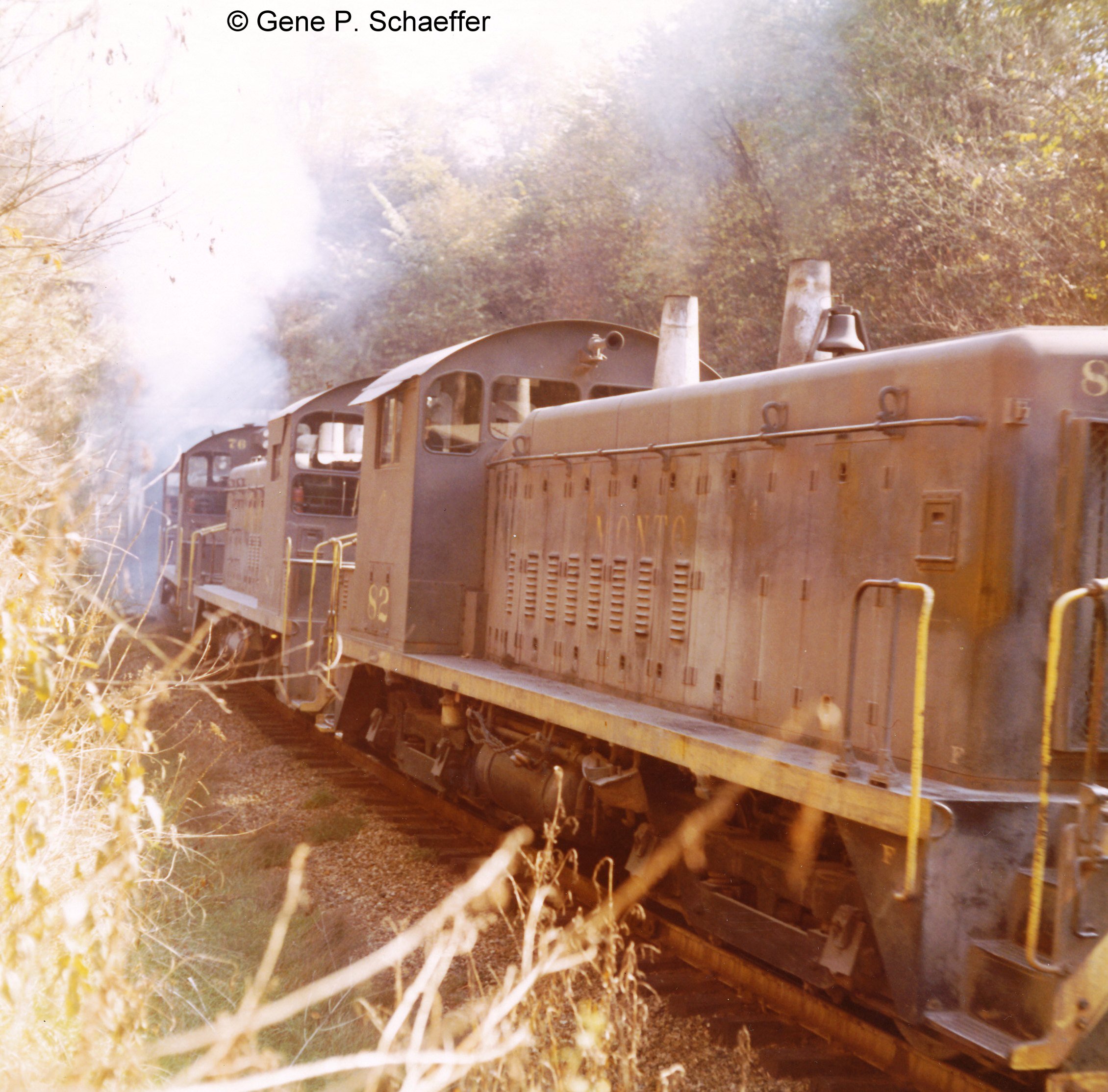
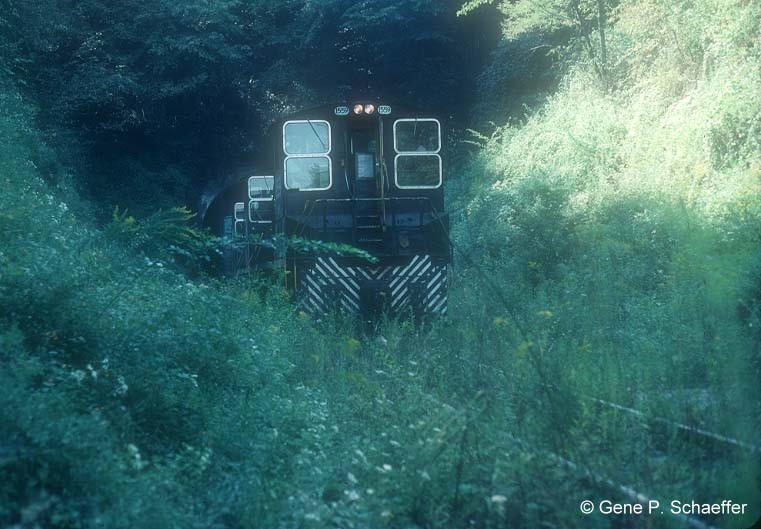
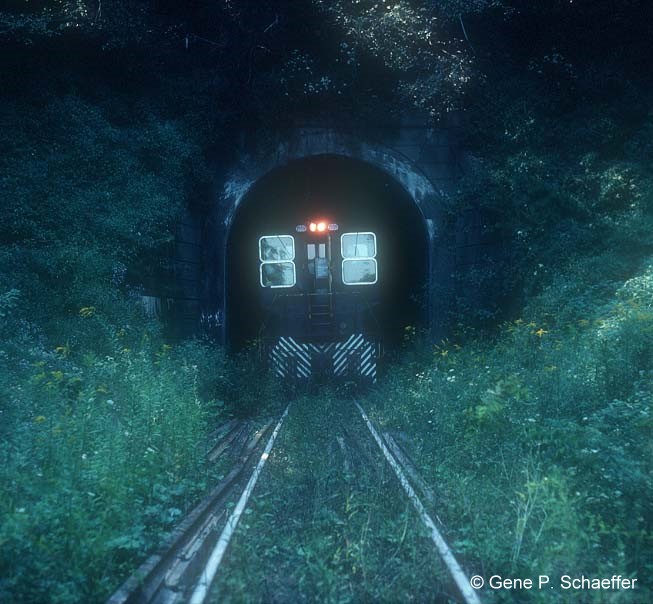
| P&LE
SW-1500's 1559-1561-1553 are now stopped at the East Portal of National
Tunnel after pulling through the tunnel with 82 empty stored
P&LE box Cars and 1 empty gondola. In this scene, the
locomotives have pulled by the Muse Junction main track switch far
enough to allow a reverse movement to couple into the caboose. Sanded
rail illustrates the locomotives were working pretty hard in pulling
the lengthy and heavy 83 car train off the Muse Branch and up the hill
into National Tunnel. This of course will be the last Montour RR train
movements through National Tunnel. September 9, 1983. Gene P.
Schaeffer |
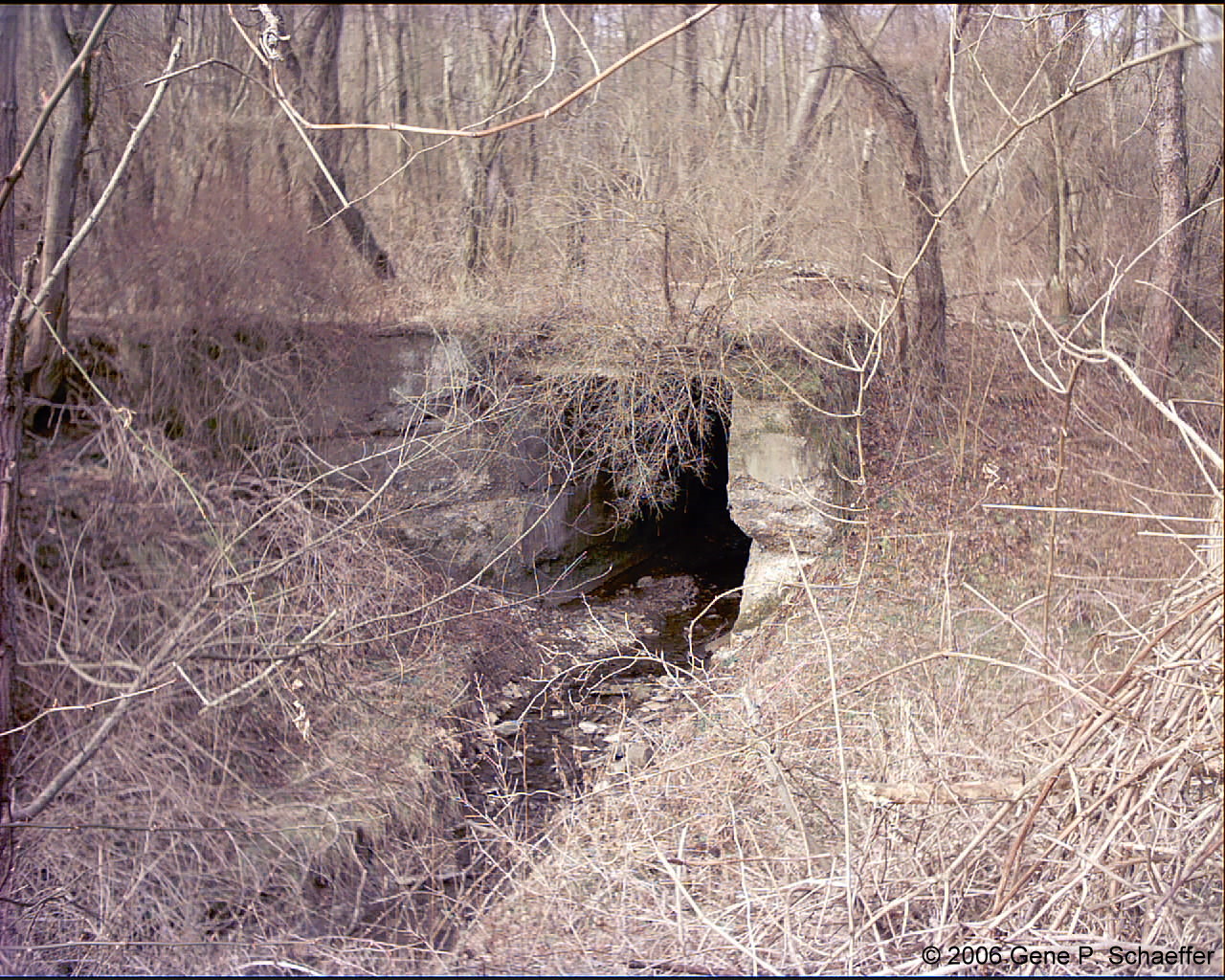
At
National Crossing, on the east side of the tunnel I wanted to
photograph the abandoned concrete overpass leading off the main track
to the former National #2 Mine. National #2 Mine was opened in 1916 and
closed in 1928. Still visible is this concrete overpass on the west end
near the tunnel. On the east end, at Papp Road overpass, you can still
see the steel seats for the bridge leading off the main track, crossing
Papp Road in the direction of National Tunnel.
If you hike through the woods between these 2 points, you can see where
the loaded yard trackage was located. Looking closely to the ground,
lots of coal are scattered about.
Gene P. Schaeffer |
| |
| |
| |
 |
 |
 |
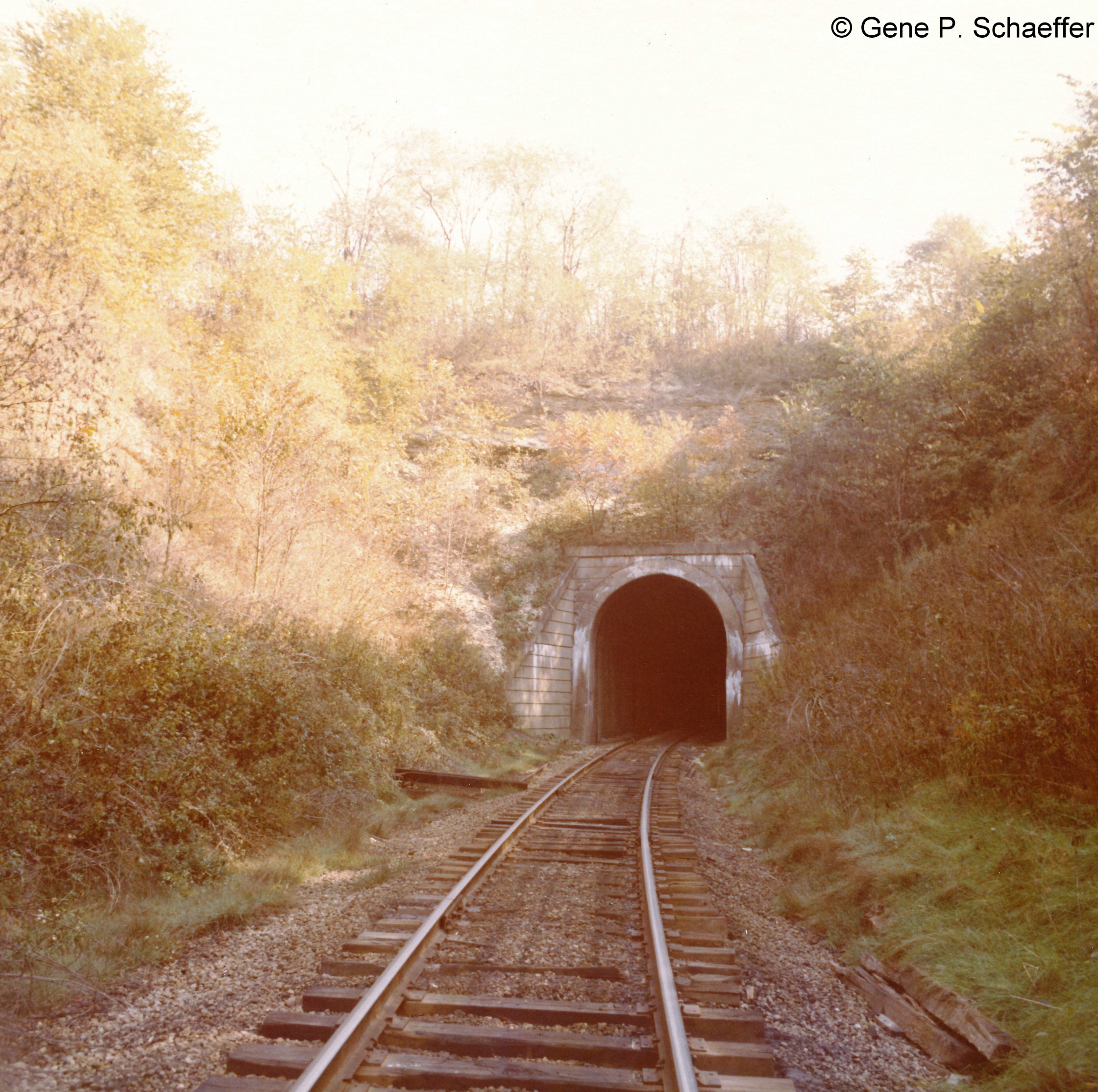
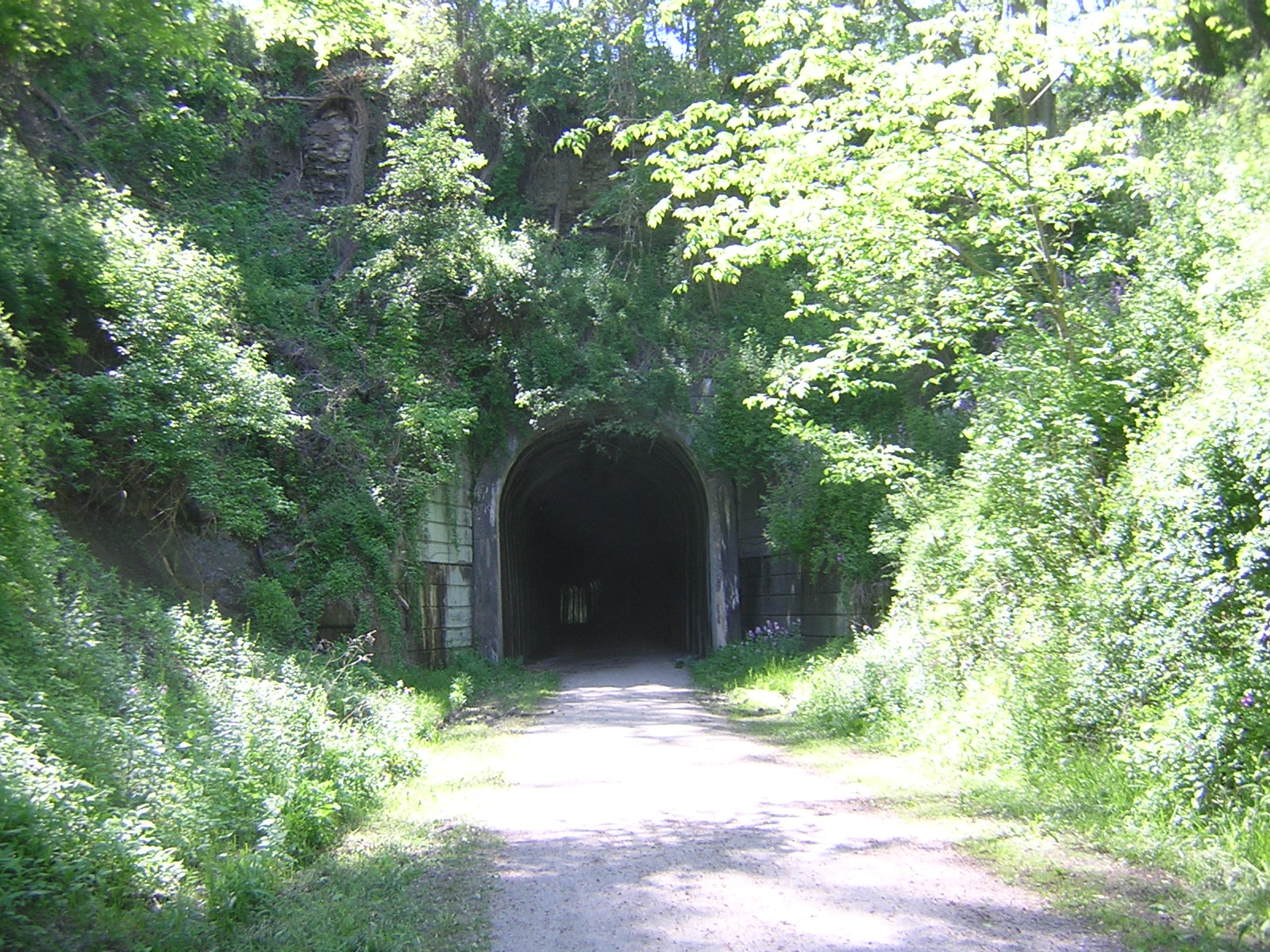
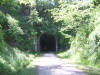
| This is the
east portal of the National tunnel. The tunnel is 623' long and curves
so that you can not see the west portal from the east. You can go
through the tunnel but it has not been 'refurbished' like the Enlow
tunnel. The tunnel is located at MP 26 |
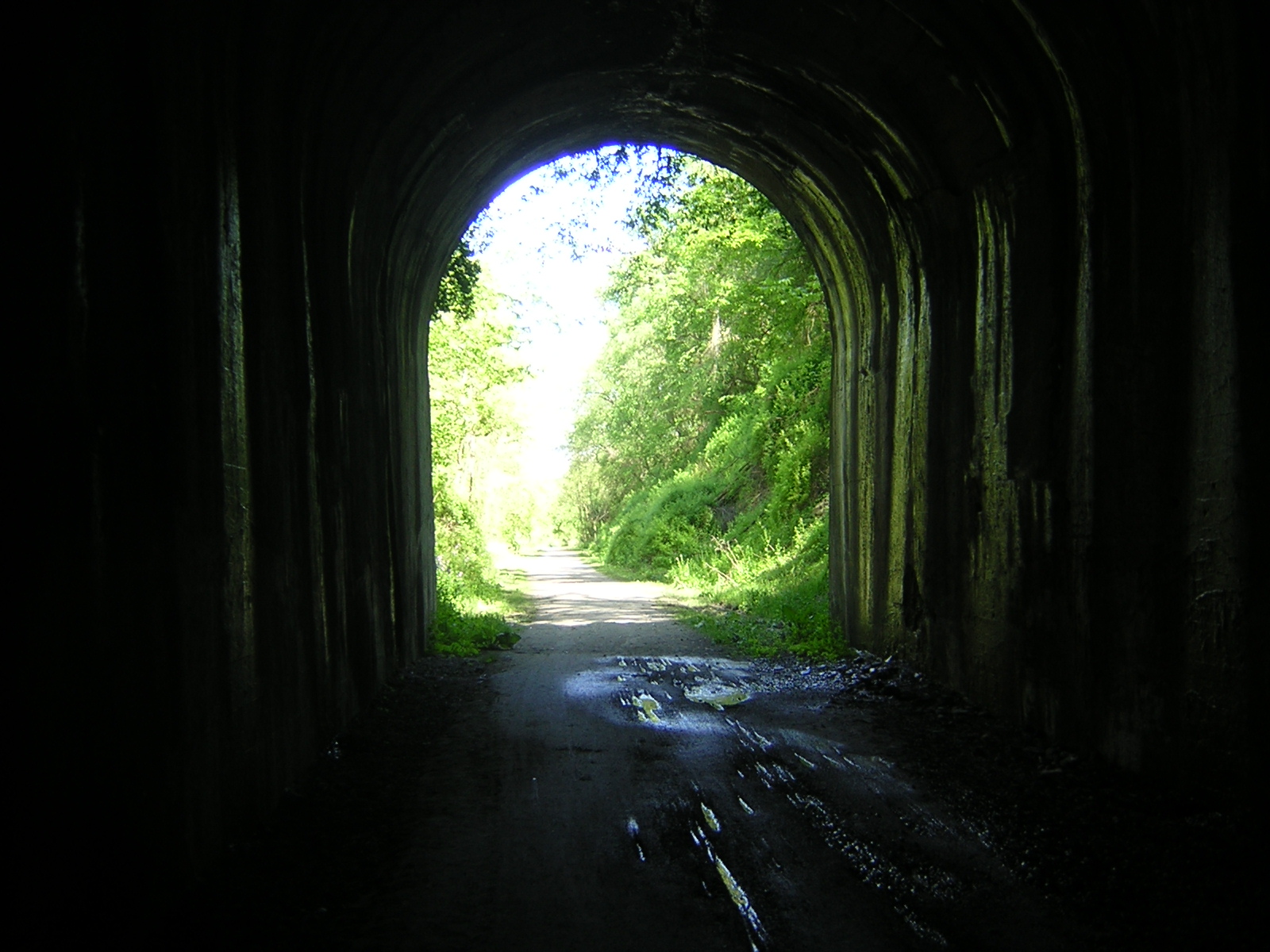
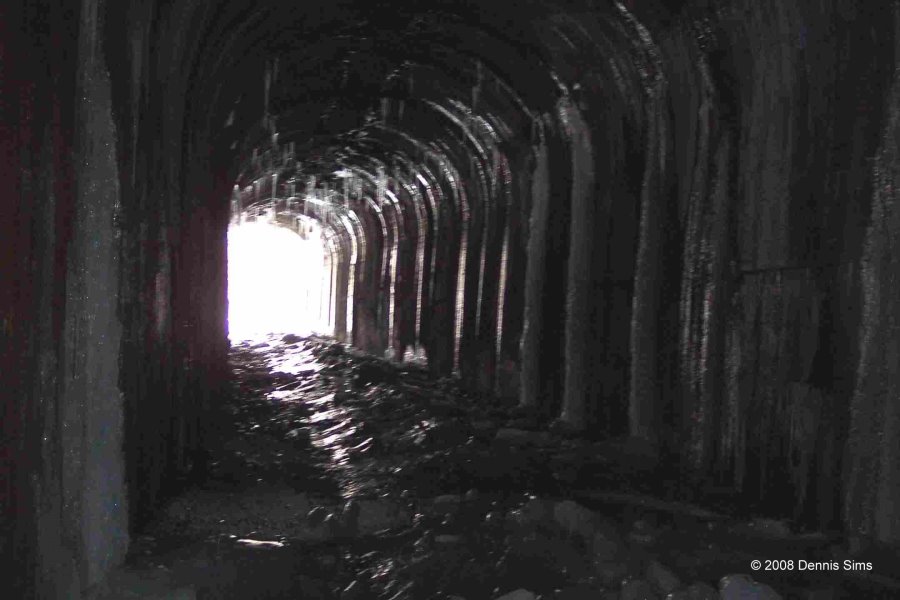
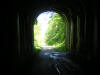
Here is a look
from the inside of the tunnel looking out the east portal. |
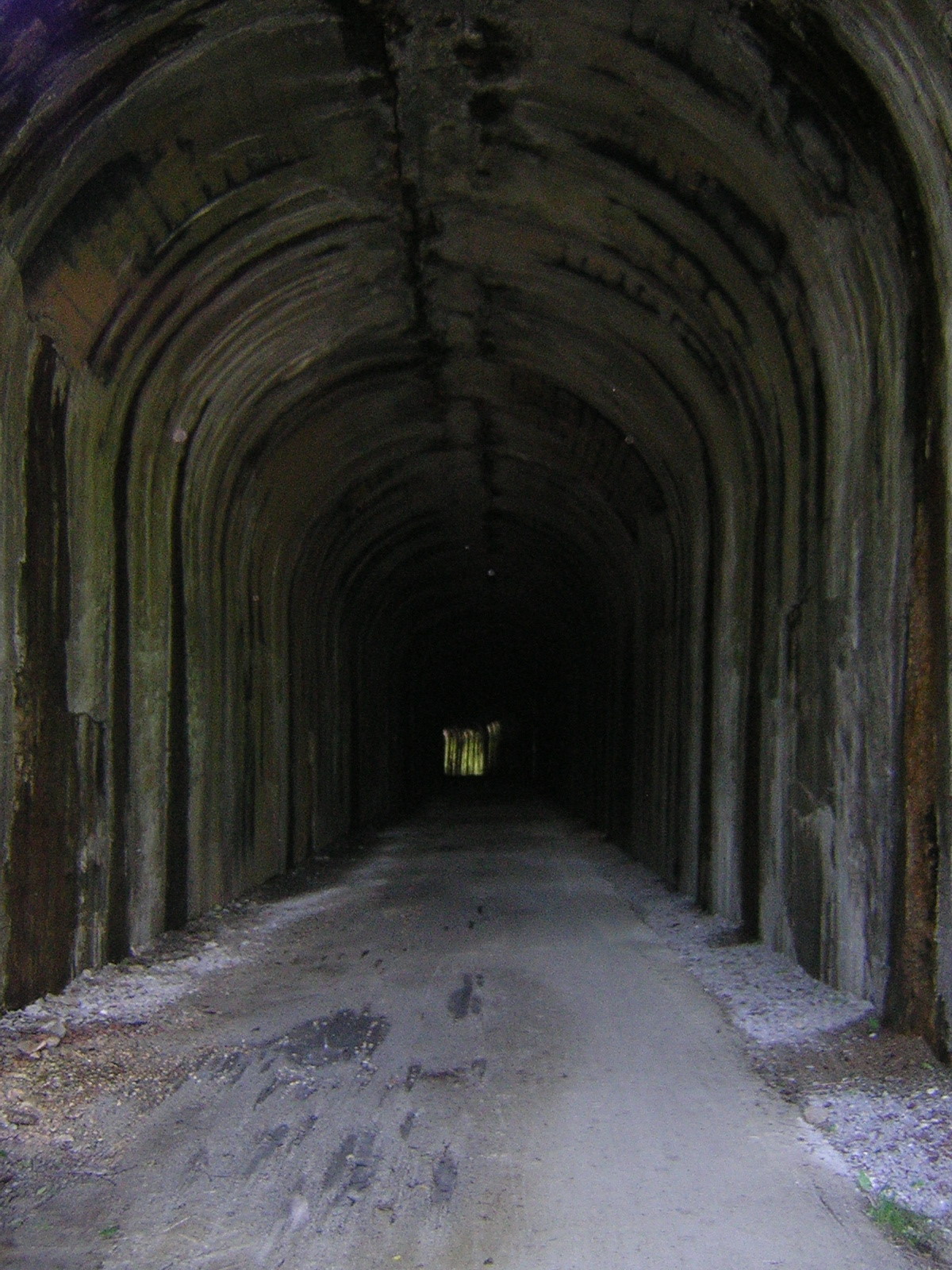
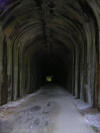
Looking into
the tunnel from the east portal. You can see the bend in the tunnel
where the outside light is shining on the walls. |
| |
|
|
 |
 |
|
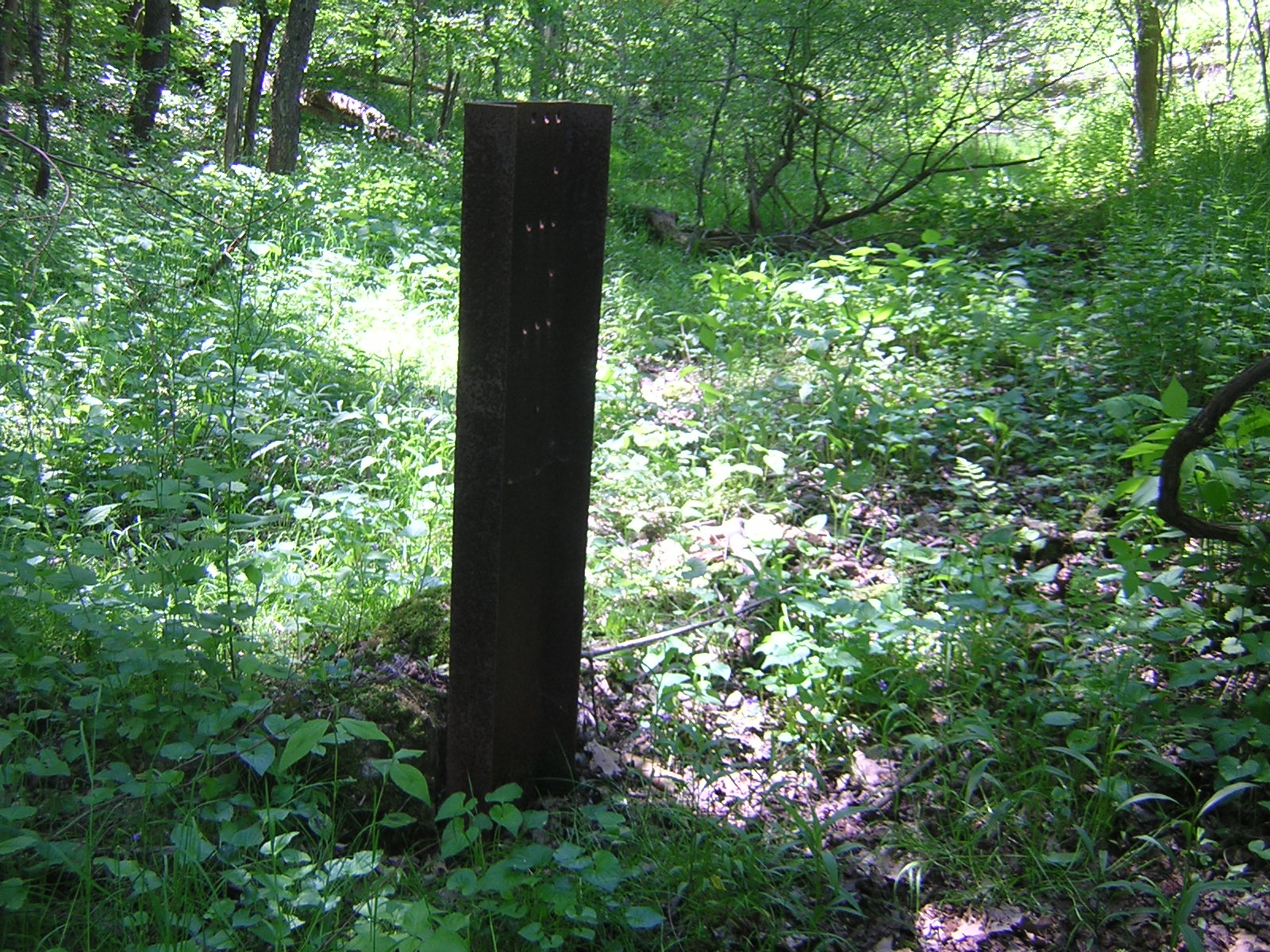
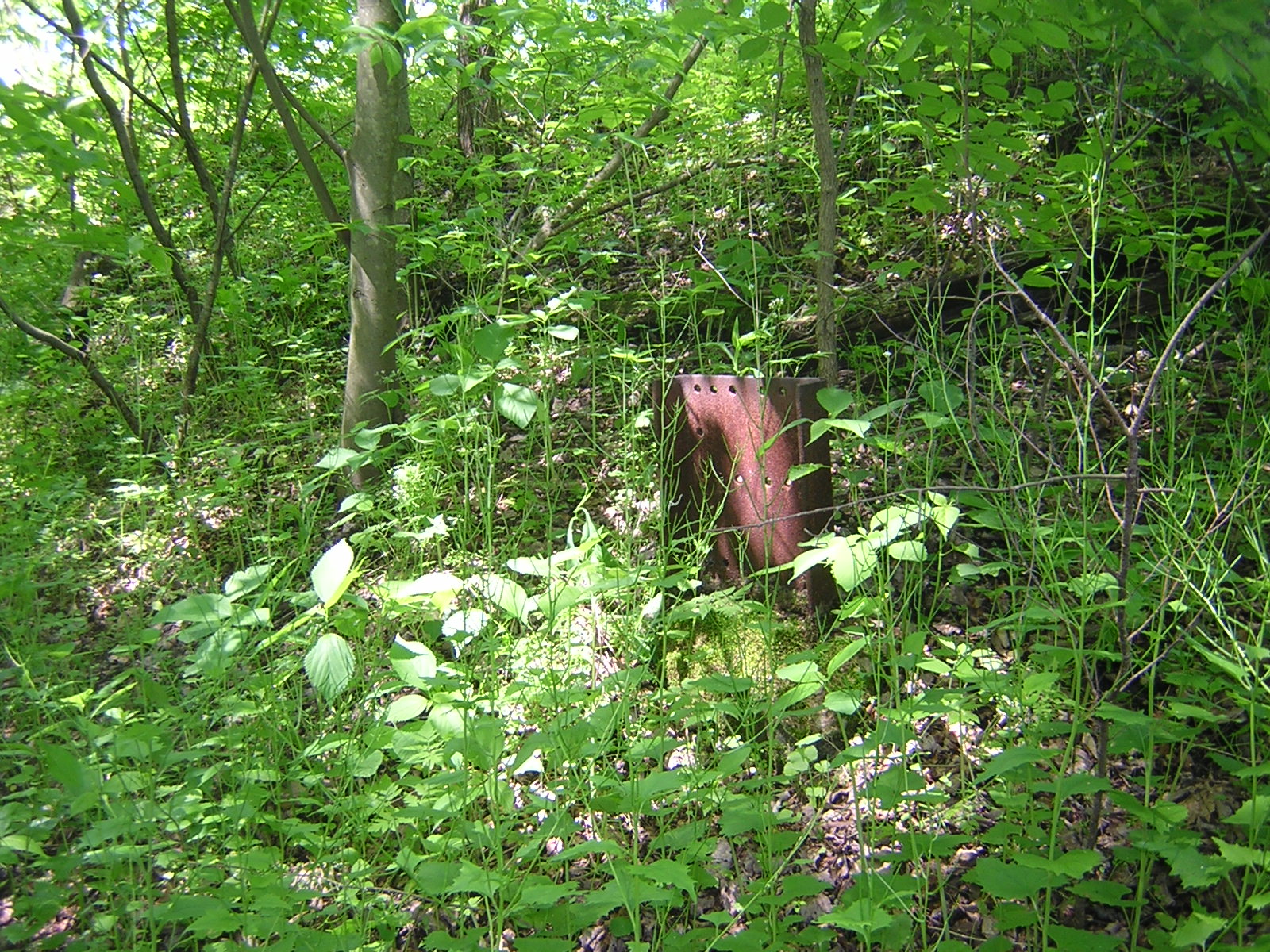
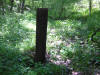
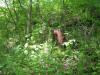
I found these
two iron rails sticking out of the ground very near MP 27. There was
also a lot of coke on the ground near these two iron posts. Does anyone
know the history here?
At a guess, the 2 steel beams near MP 27... Depending on their precise
location, may be from Nationals Mine located on the main track East of
National Tunnel. - Gene P. Schaeffer |
|
| |
|
|
 |
 |
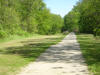 |
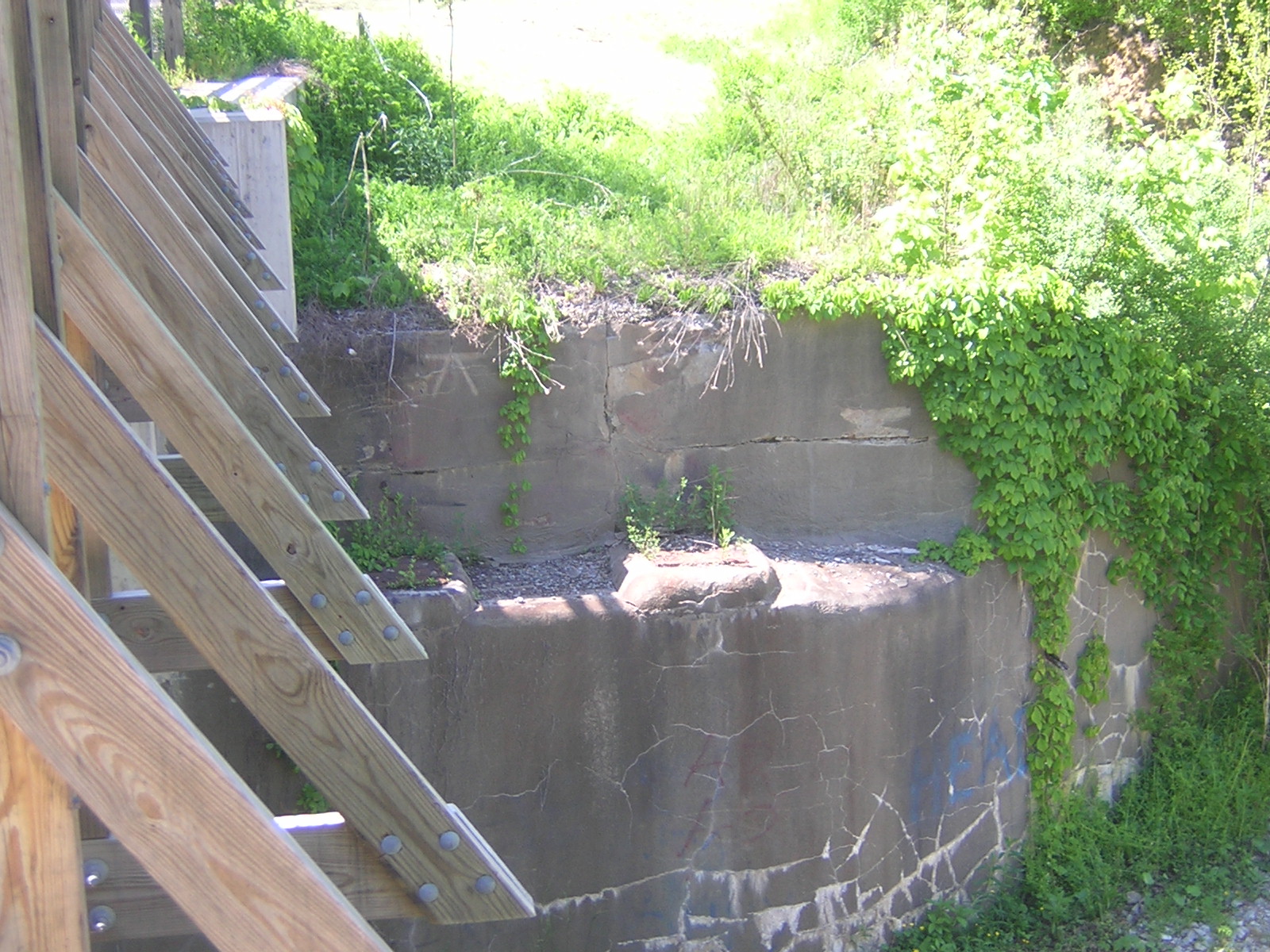
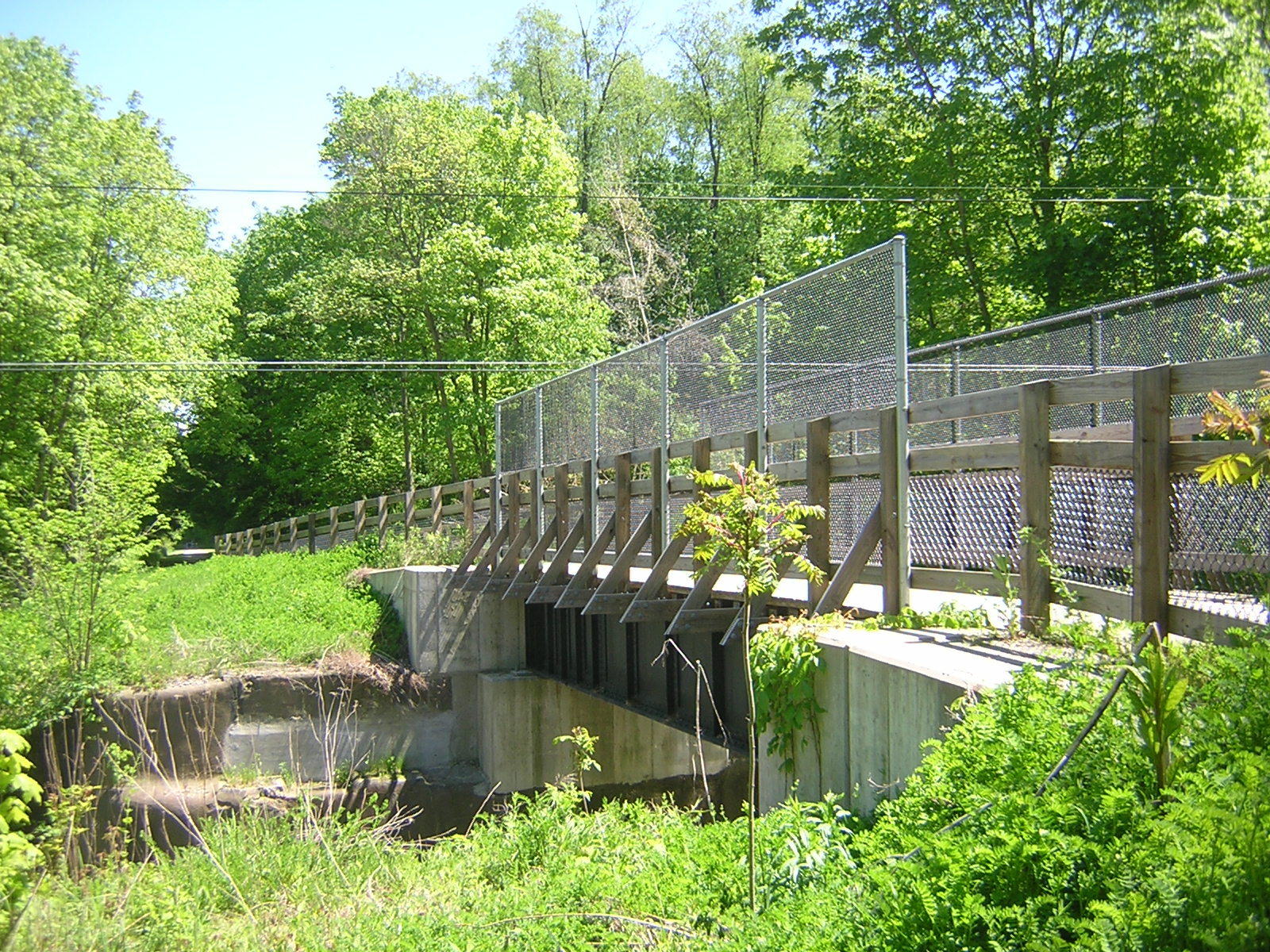
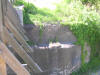
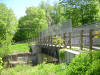
| These are
pictures of the bridge that crosses over Papp Rd. From the bridge
support you can see that it used to be larger to carry two sets of
tracks. |
Another photo
of Papp Rd Bridge. On the left of the phot is an access road from Papp
Rd up to the tracks. I don't know if this was used as part of the
railroad. There is an iron gate restricting access from Papp Rd
currently. |
| |
|
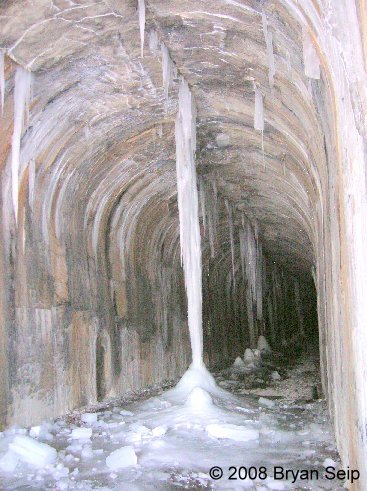
Those
pictures reminded me of a story about National tunnel . . . years ago,
when steam still ruled the Montour, my grandfather worked on the track
gang out of Southview. During the colder months, a task they had to
perform was to knock down the gargantuan icicles that formed on that
tunnel's ceiling. Turns out that if this wasn't done, those
frozen columns of water would blow out the windows of
caboose cupolas.
Another kind of interesting task he had to perform was to make sure
that the switch-stand lamps had enough oil in them...
Just another little story from Western Pennsylvania's rich
railroading heritage.
-Chris Walker |
| |
|
National
Tunnel is one of my favorite places. Center of the tunnel was on a
curve at the crest of a grade (both ways, I
think). Steam engines couldn't shut off. Talk about smoke and heat! I
remember being awfully glad to get out of that one. Bandanna soaked in
water held over the mouth and holding your breath didn't get you very
far
into the tunnel, let alone through it! - Bill Bigler |
| |
|
Not
only were caboose windows knocked out, but the locomotives themselves
were in harms way. I remember a report one winters morning as a #4 crew
reported Engine 78 took a hit from ice inside National Tunnel.
Engine 78 was a middle unit inside the 4 unit consist. If I remember
correctly, striking ice hanging down was not the problem, but the
vibration from the locomotives loosened a chunk as the westbound
locomotives were still working hauling the train up over the vertical
curve. Down came the
chunk of ice and through the locomotive cab window.
Another danger with ice build up was the threat of a derailment. Ice is
extremely hard and if not removed from inside the gauge, flanges could
climb the rail and onto the ties they go and being part of the tunnel
was curved, this problem could not be ignored - Gene P.
Schaeffer |
 Montour Railroad