Montour Railroad

Montour Railroad

Mileposts

History

Maps

Roster

Mines

Links

Gallery

Working on the Montour

Employees

Railroading 101


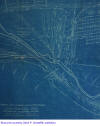
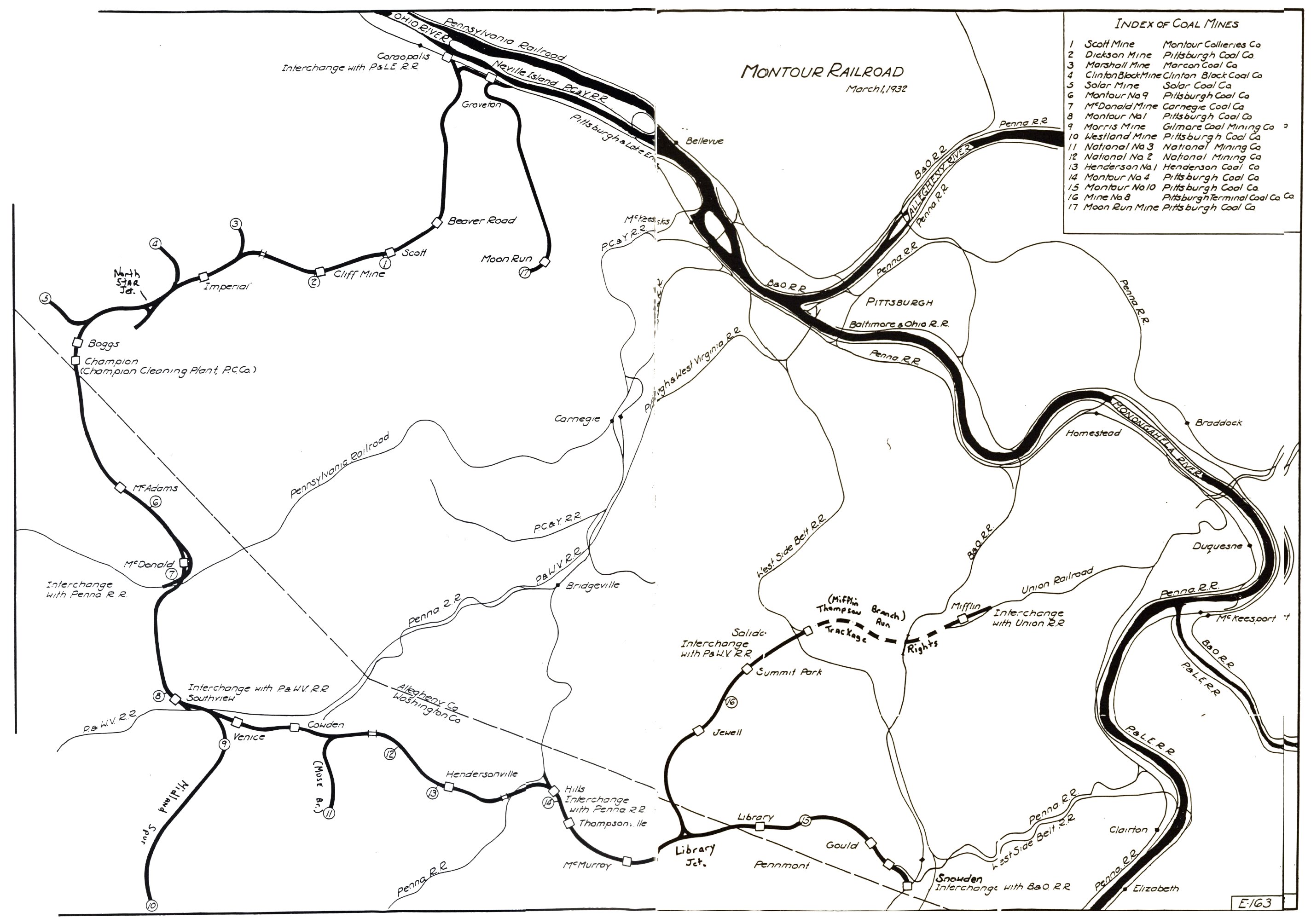
Montour System Map1 Montour Junction to National Montour System Map 2 National to Snowden & Westland
   

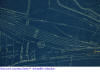
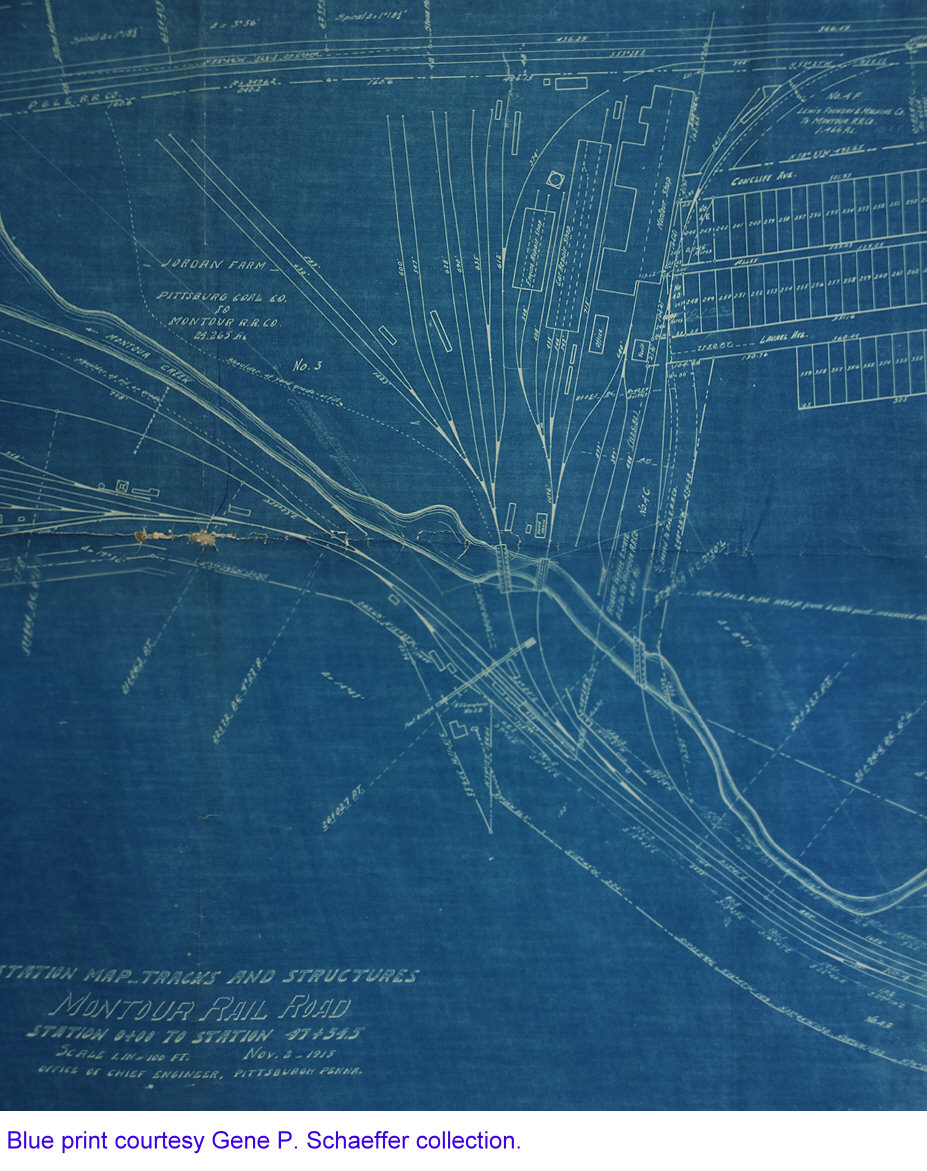
Blueprints courtesy Gene P. Schaeffer collection

 

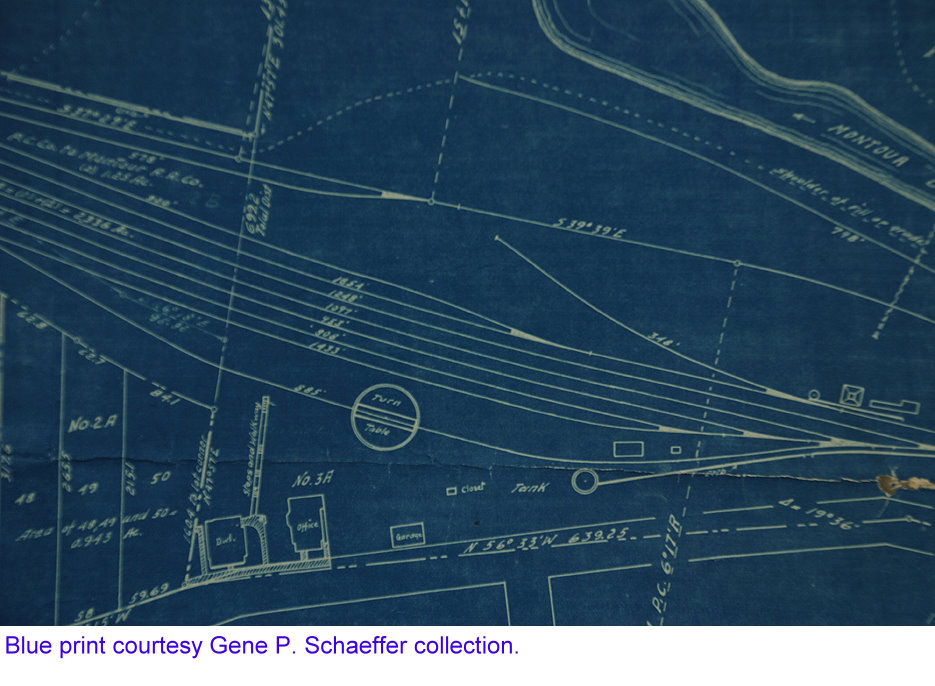
The Lower Yard at Montour Junction - location of the blue print images, was re-configured, I'm guessing the 1930's. The Turntable was no doubt used to turn the Engine for the Passenger Train, and after the demise of Passenger Trains, its use was no longer needed.

At Imperial there was the "wye" for turning before the "wye" at North Star.
 
The original Main Track in the Lower Yard down to the P&LE was rebuilt eliminating the "Siding" seen in the blue prints. That siding was primarily used to hold the Passenger Trains between runs.
 
I have 2 very old 8x10's taken from under the overhead streetcar bridge near the P&LE showing the West End of the Lower Yard and Main Track Siding switch and lead to the yard tracks.
 
These are dated 1917 and came from a Professional Photographer the railroad hired when a young boy was killed playing near the tracks and resulting lawsuit.
 
The rebuilt Lower "New" Yard at Montour Junction had just 3 tracks...Main - New 1 and New 2.
 
In the blue print showing the turntable - to the right you see the word "tank" and to the right of that a circle with a track ending in it.
 
If you have a older Montour RR Timetable, look at Station 5A. This was station 5A which was a ramp track for No 9 retail yard. Hoppers of coal were brought to Montour Junction and shoved up on the ramp for unloading. Residents who bought coal for heating in and around Coraopolis, no doubt purchased their coal from Pittsburgh Coal, No 9 retail Yard transloaded coal from railroad cars to delivery dump trucks.
 
And next to 3A in the turntable blue print you see the squares reading "Office". This was the location of the 2 homes the Montour Railroad used as General Offices from about 1915 to the late 1960's.
 
Gene P. Schaeffer


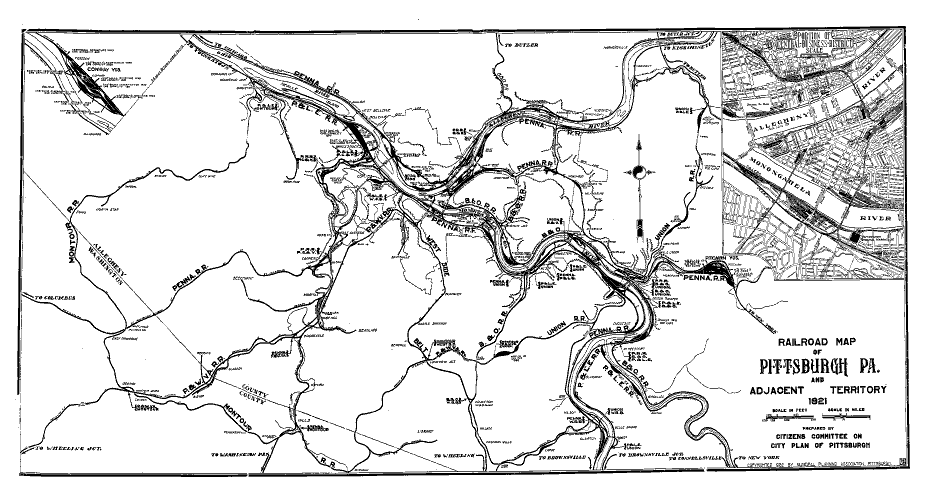
1921 Map of Pittsburgh Area Railroads

Beaver Grade Cut What happened to the town of Guy Mills?
   
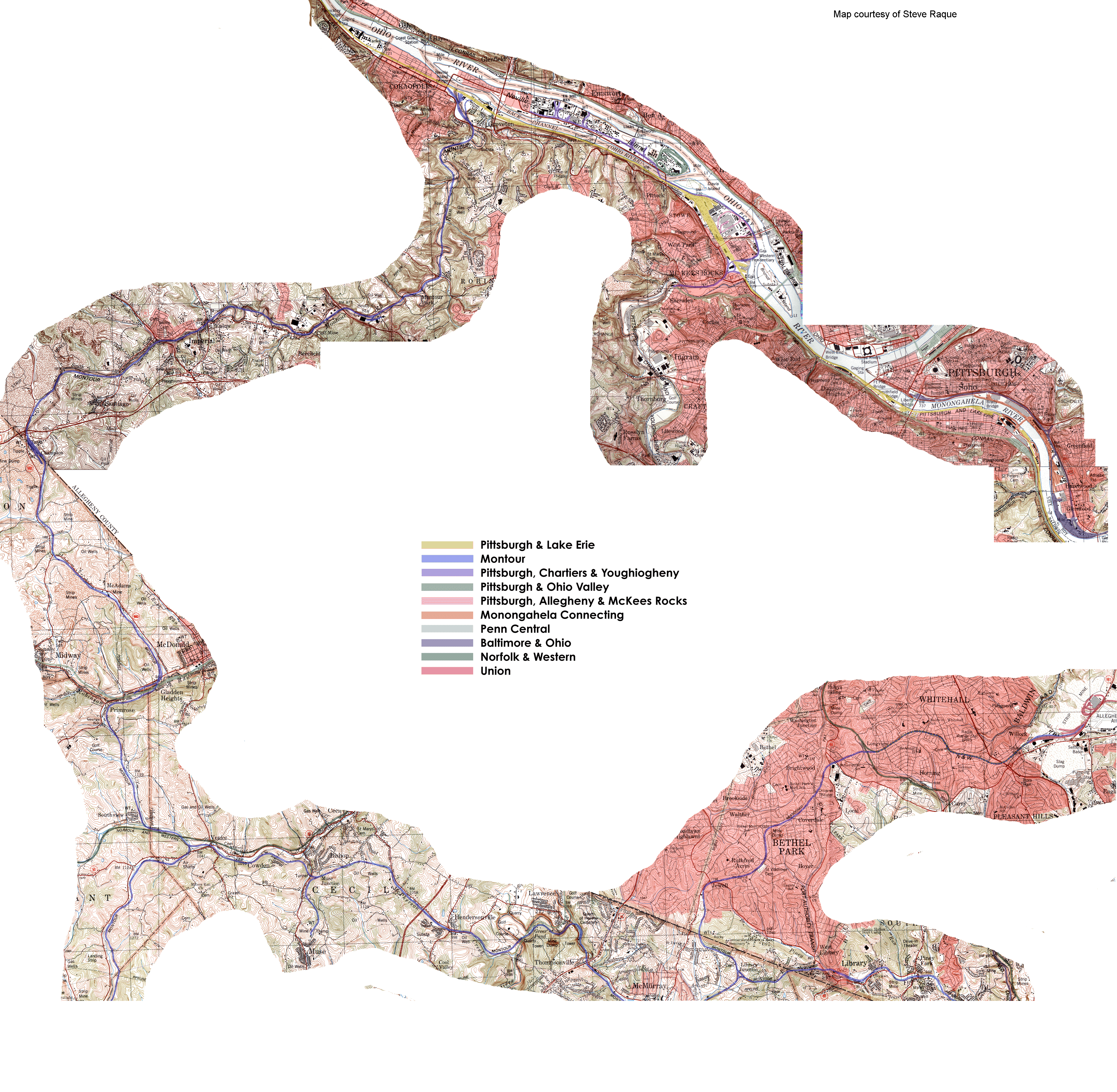
Steve Raque has constructed two excellent maps of Pittsburgh area railroads. Click on the map for a larger image. His detailed map shows the railroads overlaying a topography map. Thanks for the maps Steve. Be sure also to check out his web page.

Here is a full copy of the system map from Gene Schaeffers Montour RR book. Some of the editions did not have the full copy.


Here is a map showing the land owned by Henry Montour at what eventually became Montour Junction.

Tunnel #1 - Bob Ciminel

I'll call it Montour Tunnel No. 1 for starters, but the first tunnel on the Montour has so many different names it confuses a lot of folks.  Let's start from the beginning before the Montour even existed.
 
Plates 27 & 28 of the Warranty Atlas of Allegheny County, which shows the original owners of land grants in the county, show the spit of land where the tunnel is located as being owned by Samuel Jefferey.  This would be on the original alignment of the right of way before the tunnel was built in 1924.  The land where the tunnel actually went through the ridge was owned by Robert McMin.  You can see that on the attached map.  Samuel Jeffery's deed goes back to 1785, while Robert McMin's was recorded in 1784.  So, that would give precedent to calling it McMin Tunnel.
 
If we move ahead to 1906, the Carnegie Quadrangle of the USGS topographic map shows the area around the tunnel labeled "McMinn."  There's no mention of the Jefferys or any place called "Jefferytown." The community of Enlow doesn't exist either.
 
Montour Railroad public timetable No. 16, which went into affect on April 25, 1915, lists the station as "Jeffreytown."  It's also listed that way on passenger tickets.
 
The 1940 Montour Railroad employee timetable does not list the tunnel; however, the 1962 Montour track chart identifies the tunnel as "Jeffrytown," without the second "e" in the name.
 
Gene's book refers to  the tunnel as "Jeffrey Town" in the chapter titled "Montour Junction to Imperial Realignment" on Page 66.  The "Bridges and Tunnels of Allegheny County" website says the "official" name of the tunnel is either "Enlow" or "Jeffrey Town."
 
So here's my argument: The name "Jeffery" is only mentioned in the Warranty Atlas and is never seen again on any official documents.  The "McMins" actually owned the land the tunnel was bored under.  The names "McMin" and "Jefferey" have been spelled "Jeffrey" and "McMinn" over the years.  The Montour railroad timetables and track chart list the station at the west end of the tunnel as "Jeffreytown"  and the east end is called "Enlow."  The timetables list stations from west to east, in the direction of train superiority.  So I will refer to it as the "Jeffreytown Tunnel" until someone can provide solid evidence to the contrary.